Japan Asks Every Household to Stock a Week of Food and Water. What That Means — and What It Doesn’t
On its first day, Japan’s new disaster agency issued an ‘emergency request’ to stockpile supplies. Some people online panicked. Here’s what the government actually asked, and the Japanese behind it.
 📰 News, Made Easy備蓄
Imagine opening your phone and seeing the words 緊急要請 — “emergency request” — from your government. Your first thought might be: what do they know that I don’t?
That’s roughly what happened in Japan this week. As the country’s new Disaster Management Agency (防災庁) launched on November 2, disaster minister Goshi Hosono said the government would issue an emergency request to households, local governments and businesses. For families, the message was simple: stock up on food, water and toilet supplies — at least three days’ worth, and ideally a week.
Online, some people jumped to dark conclusions. Was a war coming? A megaquake? A massive cyberattack? The government’s answer: none of the above.
What the request actually says
According to reports on the plan:
- Households should prepare food, water and toilet supplies
- The minimum is 3 days; the goal is 1 week
- For water, the common guideline is about 3 liters per person per day — drinking plus cooking. For a week, that’s 21 liters per person
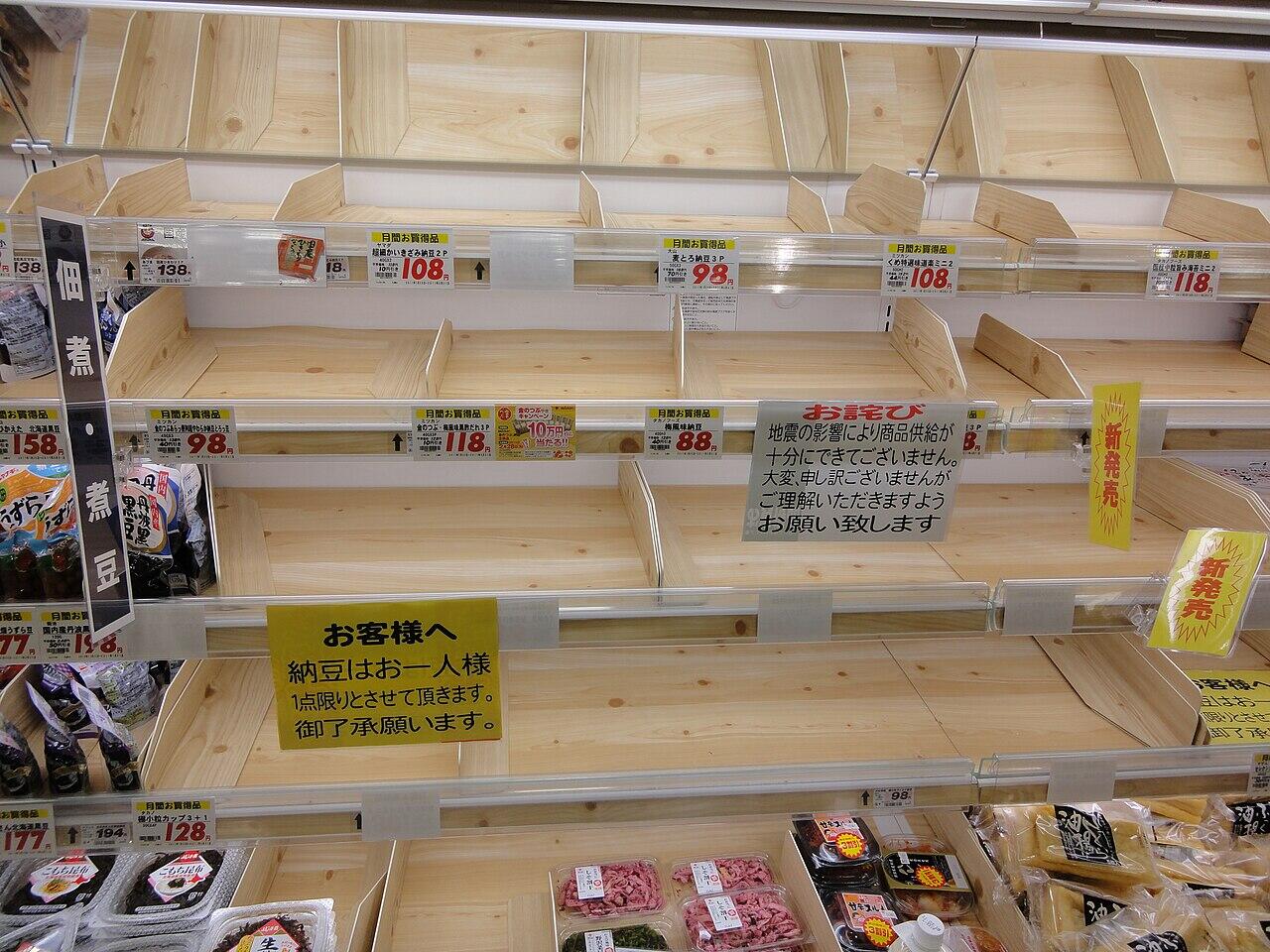
The reasoning, as Hosono explained before the launch, is that after a truly huge disaster, government help may not arrive right away. Roads can be blocked, and supplies take time to reach millions of people. A week of your own supplies buys time.
What it does NOT mean
Officials and explainers stressed one point repeatedly: this is not a warning about a specific upcoming disaster. It isn’t an evacuation order either. It’s a campaign tied to the new agency’s launch, meant to make preparation a normal part of life.
The key word is 予告 (yokoku), “advance notice.” This was not a 予告 of anything. It was a 要請 (yōsei) — a request.
A 要請 asks you to prepare. A 予告 would tell you something is coming. This was the first, not the second.
Why people worried anyway
Part of the reason is the word 緊急 (kinkyū), “emergency.” It’s a strong word, and seeing it from a brand-new government agency made some people nervous. It also arrived at a time of general uncertainty, so speculation spread quickly on social media.
For learners, it’s a good reminder that official Japanese can sound more alarming than the content. Words like 緊急, 要請 and 警戒 (keikai, caution) appear often in government messages. Reading the full sentence — not just the headline — matters.
How Japanese families actually prepare
The most popular method in Japan is ローリングストック (rōringu sutokku), “rolling stock”:
- Buy a little more of what you already eat — canned food, rice, instant noodles, retort curry, bottled water.
- Eat the oldest items first.
- Replace what you use on your next shopping trip.
This way your stockpile never expires, and you’re not stuck eating unfamiliar emergency crackers after a disaster. Other common items include a portable toilet kit (携帯トイレ, keitai toire), a flashlight, batteries, a radio and a mobile battery.
Two words you’ll see in disaster guides: 断水 (dansui, water outage) and 停電 (teiden, power outage). Planning for both is the heart of Japanese disaster prep.
If you live in Japan
You don’t need to panic-buy. Start small: an extra case of water, a few days of food you like, and a toilet kit. Check your local 避難所 (evacuation shelter) too — we listed the key emergency words in our guide to the new disaster agency. And if you’re just visiting, the tax-free changes are the other big November update you should know about.
Read it in Japanese 日本語で読んでみよう
- 11月2日に、新しい「防災庁」ができました。On November 2, the new Disaster Management Agency was created.
- 防災担当の大臣は、国民に「緊急要請」を出すと説明しました。The minister in charge of disaster management explained he would issue an “emergency request” to the public.
- 食料や水、トイレを、最低3日分、できれば1週間分準備してほしいという内容です。It asks people to prepare food, water and toilets — at least three days’ worth, ideally a week’s worth.
- 水は、1人1日3リットルが目安です。The guideline for water is three liters per person per day.
- これは、特定の災害を予告するものではありません。This is not a prediction of any specific disaster.
💡 Tip: read the Japanese first, guess the meaning, then tap “Show English” to check.
Key words この記事の単語
How Japanese people say it 使ってみよう
- 最低3日分、できれば1週間分。Saitei mikka-bun, dekireba isshūkan-bun.At least three days’ worth — ideally a week’s worth.💡 〜分 (bun) = “worth of.” 3日分 = three days’ worth.
- ローリングストックしてる?Rōringu sutokku shiteru?Do you do rolling stock?💡 A popular Japanese method: keep extra everyday food, eat the oldest first, and replace it as you go.
- これは災害の予告ではありません。Kore wa saigai no yokoku de wa arimasen.This is not a warning of a specific disaster.💡 予告 (yokoku) = advance notice. Officials stressed this point.
Quick quiz ミニクイズ
Q1. What did the government ask households to store?
Food, water and toilets — at least 3 days’ worth, ideally a week.
Q2. 「停電」の意味は?
停 (stop) + 電 (electricity) = power outage.
Q3. How much water per person per day is the guideline?
About 3 liters per person per day — so 21 liters for one person for a week.
Sources
Keep reading 次に読む
 Pop Cultureホビ垢
What Is a ‘Hobiaka’ (ホビ垢)? Inside Japan’s Cute Hobby-Account Trend
 News, Made Easy貧乏
‘NISA Poverty’: Why Some Young Japanese Are Investing So Much They Can’t Afford to Live
 Slang & Viral Wordsドパガキ