Japan Launches a New Disaster Agency. Here Are the Emergency Words Every Visitor Should Know
On November 2, Japan opened 防災庁 — a new command center for earthquakes, typhoons and floods. What it does, why it matters, and the Japanese that could keep you safe.
If you’ve spent any time in Japan, you’ve probably felt it: a sudden sway of the floor, the hanging lights swinging, and then — nothing. Most Japanese people barely look up from their phones. Small earthquakes are part of life here.
But big disasters are part of Japan’s history too. And on November 2, 2026, the country opened a new government body built specifically to deal with them: 防災庁 (Bōsai-chō), the Disaster Management Agency.
What is 防災庁?
The name breaks down simply:
- 防 (bō) — to prevent, to defend
- 災 (sai) — disaster
- 庁 (chō) — government agency
防災 (bōsai) means disaster prevention or preparedness, and it’s one of the most common words in Japanese public life. You’ll see it on signs, school notices, convenience store shelves and TV.
According to reports on the government’s plan, the new agency was created by reorganizing the disaster-management section of the Cabinet Office. The prime minister sits at the top, and a dedicated disaster management minister has the power to issue recommendations to other ministries. It started with a staff of 352. The idea is to have a single “control tower” that coordinates across government, instead of each ministry working separately.
Why now?
Japan sits on top of several tectonic plates and faces earthquakes, tsunami, typhoons, heavy rain and volcanic eruptions. Experts have long warned about very large future earthquakes, and recent years have brought repeated floods and landslides.
The new agency is meant to strengthen preparation before disasters, not just the response after them — from planning shelters to coordinating supplies.
In Japan, preparing for disaster isn’t pessimism. It’s just daily life.
The emergency Japanese every visitor should know
This is where language becomes a safety skill. If you live in or travel to Japan, learn these:
- 地震 (jishin) — earthquake
- 津波 (tsunami) — yes, the English word came from Japanese
- 避難 (hinan) — evacuation
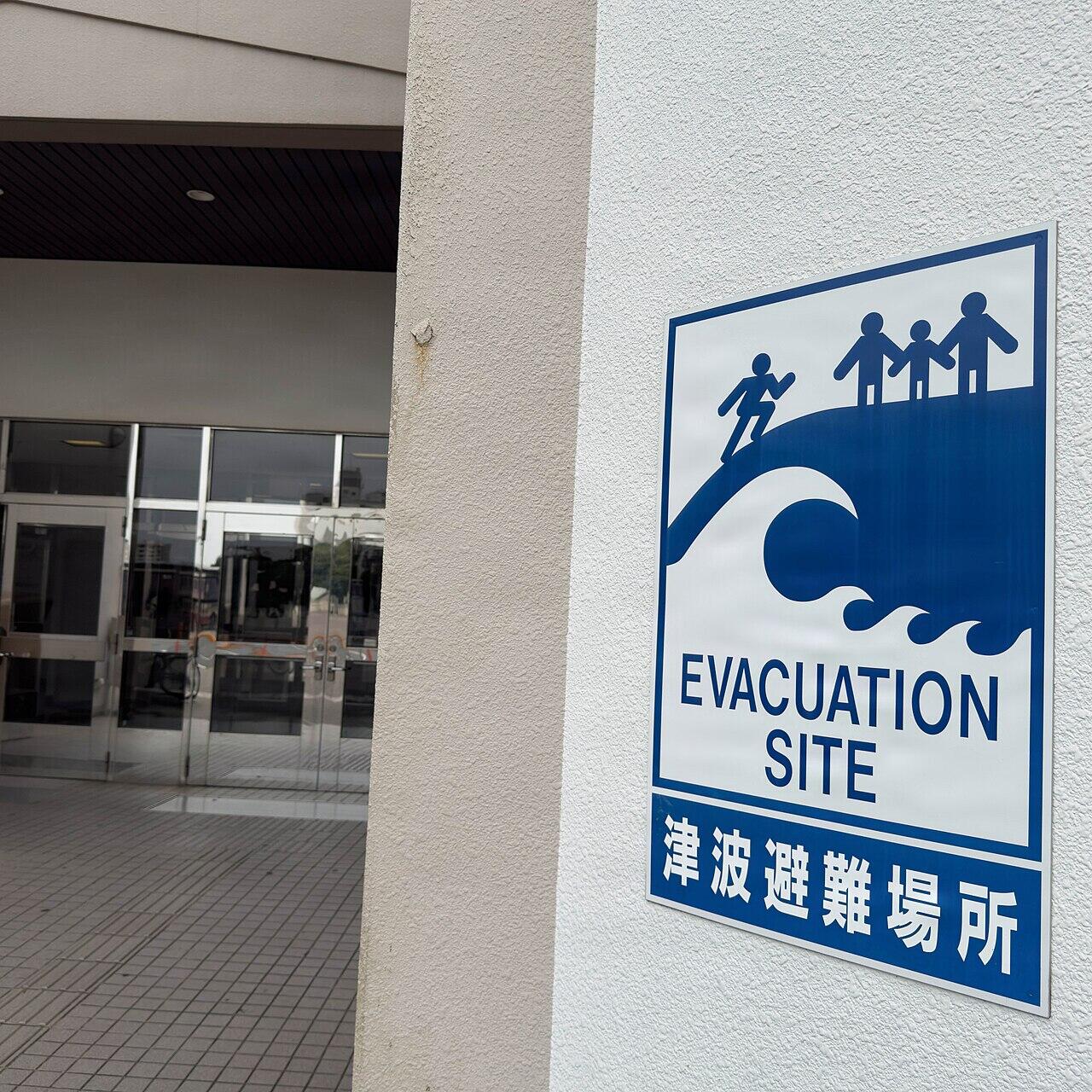
- 避難所 (hinanjo) — evacuation shelter (often a school gym)
- 緊急地震速報 (kinkyū jishin sokuhō) — Earthquake Early Warning, the loud alarm that can sound on phones and TV seconds before shaking arrives
- 震度 (shindo) — Japan’s seismic intensity scale, from 0 to 7, showing how strongly the ground shook in your area
What to do when the phone alarm goes off
- Protect your head. Get under a sturdy table if you can.
- Stay away from windows and things that can fall.
- Don’t rush outside during the shaking.
- If you’re near the coast and hear 津波, move to high ground immediately.
How to prepare as a visitor
- Note the 避難所 near your hotel — many hotels list it on the room’s emergency card.
- Look for green-and-white 避難場所 (hinan basho, evacuation area) signs around town.
- The Japan Tourism Agency’s Safety tips app sends alerts in English and other languages.
Earthquakes are one reason Japan feels so orderly in a crisis: everyone has practiced. Learning a few of these words means you can practice too. For a lighter side of Japanese public rules, see what changed in Shibuya this Halloween, or read about the holiday Japan celebrated just before this agency opened: Culture Day.
Read it in Japanese 日本語で読んでみよう
- 2026年11月2日、日本に「防災庁」ができました。On November 2, 2026, Japan’s Disaster Management Agency was created.
- 地震や台風などの災害に、国全体で対応するための組織です。It is an organization to respond to disasters like earthquakes and typhoons as a whole country.
- トップは総理大臣で、防災を担当する大臣もいます。The top is the prime minister, and there is also a minister in charge of disaster preparedness.
- 日本にいるときは、近くの避難所の場所を確認しておきましょう。When you are in Japan, check where the nearest evacuation shelter is.
- スマホが大きな音で鳴ったら、それは緊急地震速報かもしれません。If your phone rings with a loud sound, it may be an Earthquake Early Warning.
💡 Tip: read the Japanese first, guess the meaning, then tap “Show English” to check.
Key words この記事の単語
How Japanese people say it 使ってみよう
- 地震だ!机の下に入って!Jishin da! Tsukue no shita ni haitte!Earthquake! Get under the desk!💡 Drop, cover and hold on — Japanese children practice this at school from a young age.
- 津波が来るかもしれません。Tsunami ga kuru kamo shiremasen.A tsunami may be coming.💡 〜かもしれません = “might.” If you hear 津波 near the coast, move to high ground right away.
- 大丈夫ですか?けがはありませんか?Daijōbu desu ka? Kega wa arimasen ka?Are you okay? Are you hurt?💡 けが (kega) = injury. A kind question to ask anyone after a quake.
Quick quiz ミニクイズ
Q1. 「避難所」はどんな場所?
避難 (evacuation) + 所 (place) = evacuation shelter. Often a school gym or community center.
Q2. When did Japan’s new disaster agency launch?
防災庁 started on November 2, 2026.
Q3. 「地震」の意味は?
地 (ground) + 震 (shake) = earthquake.
Sources
Keep reading 次に読む
 Pop Cultureホビ垢
What Is a ‘Hobiaka’ (ホビ垢)? Inside Japan’s Cute Hobby-Account Trend
 News, Made Easy貧乏
‘NISA Poverty’: Why Some Young Japanese Are Investing So Much They Can’t Afford to Live
 Slang & Viral Wordsドパガキ